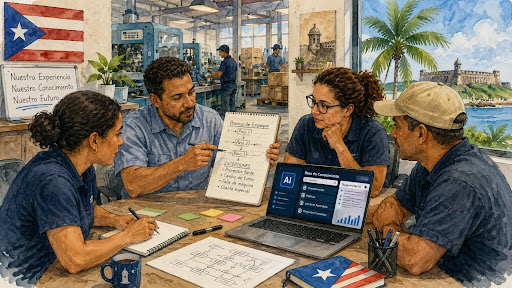
Why This AI Question Matters in Puerto Rico
Puerto Rico does not need to choose between AI and experienced workers. The better question is whether businesses can use AI without losing the workplace memory that keeps operations steady when the manual is incomplete.
That matters because institutional knowledge AI is not just a software topic. In Puerto Rico, it touches manufacturing floors, logistics teams, medical device operations, accounting offices, family businesses, and service teams that depend on people who know how things really work.
AI can summarize documents and speed up training. It can also miss the small judgment calls that experienced employees make every day.
What Puerto Rico Teams Should Know
- Why This AI Question Matters in Puerto Rico
- The Fast Answer for Managers and Workers
- What Institutional Knowledge Really Means
- How to Protect Experience Before Automating
- Mistakes That Make AI Adoption Riskier
- The Bottom Line for Puerto Rico Workplaces
- What to Do Before the Next AI Rollout
- FAQs
- References
The Fast Answer for Managers and Workers
- Best for: Puerto Rico employers, supervisors, plant teams, HR staff, and workers trying to adopt AI without losing operational memory.
- Main takeaway: AI can organize knowledge, but experienced people still understand context, exceptions, quality habits, and local constraints.
- Effort required: A basic knowledge-capture plan can start with 3 to 5 interviews and one process map per critical role.
- Best result to expect: Faster training, fewer repeated mistakes, and better AI output review.
- When not to use this: Do not automate a role first and document it later. That usually means the most valuable context has already walked out the door.
What Institutional Knowledge Really Means
Institutional knowledge is the practical memory inside a workplace. It includes written procedures, but it also includes patterns, exceptions, supplier habits, customer expectations, quality warnings, and the informal fixes people learn after years on the job.
In Puerto Rico, this can be very practical. A manufacturing supervisor may know which machine sounds slightly off before a batch fails. A warehouse lead may know which supplier delay usually means the shipment will miss the ferry window. An office manager may know which customer needs a phone call instead of another email.
Key Terms for This Topic
- Institutional knowledge: Workplace memory built from experience, repetition, and problem solving.
- Tacit knowledge: Know-how that people use but may not have written down clearly.
- Human oversight: A person reviews, questions, and approves AI-supported work.
- Process exception: A situation where the official procedure does not match reality.
A Puerto Rico Workplace Scenario
Imagine a medical device supplier in the metro area wants to use AI to train new customer service staff. The AI can summarize return policies, shipping steps, and complaint categories. That helps.
But the senior employee who has handled accounts for 12 years knows which clinics call after closing time, which product issues need faster escalation, and which delays happen during heavy rain, holidays, or port disruptions. If that knowledge is not captured, the AI training tool may sound correct while missing the local judgment that protects customers.
How to Protect Experience Before Automating
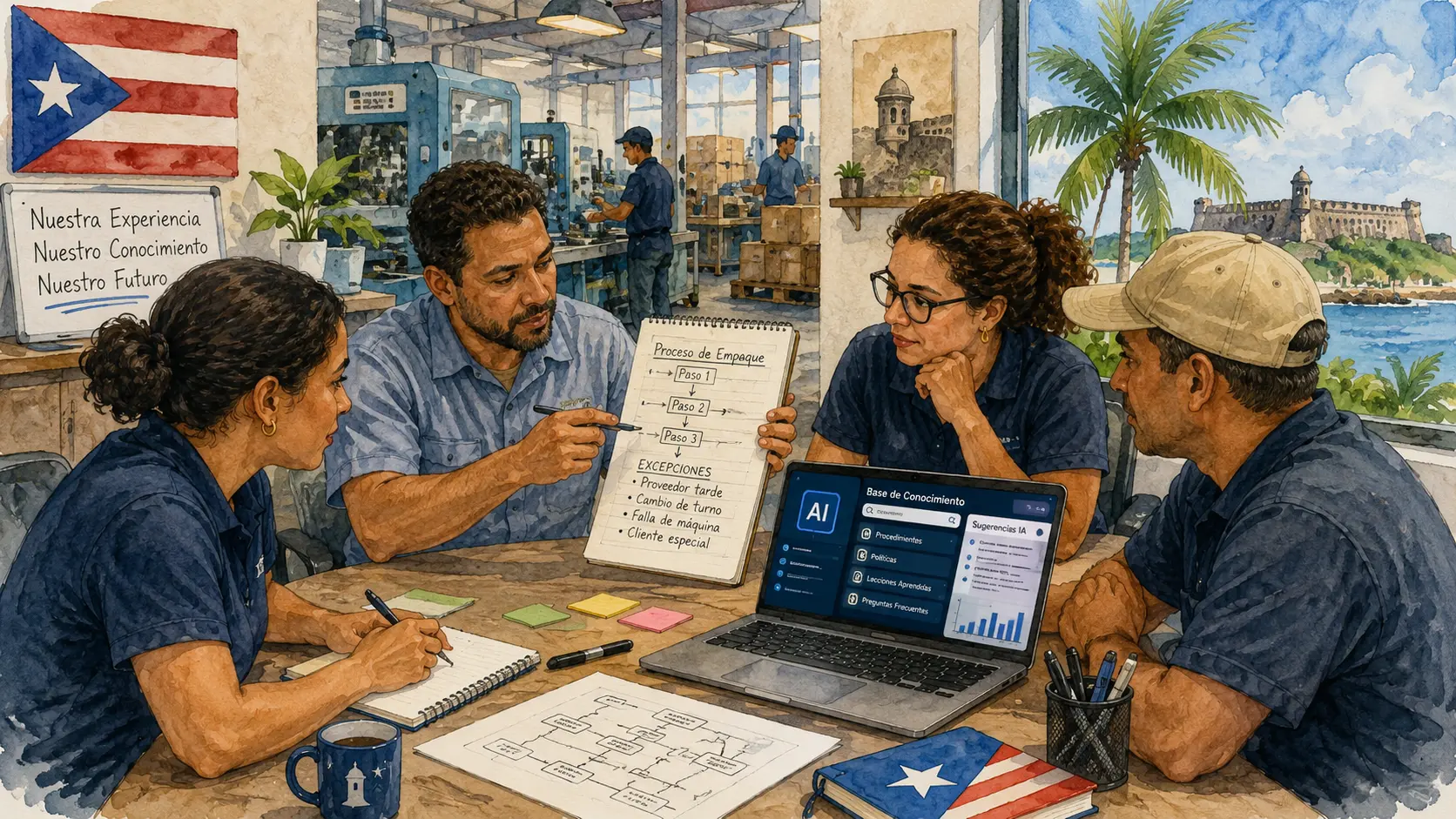
The safest approach is simple: capture the human knowledge before turning the job into a tool, script, or chatbot. Start with the roles where mistakes are expensive, slow, or hard to reverse.
Practical Steps for Puerto Rico Businesses
- Pick one critical process, such as quality checks, customer complaints, inventory handoffs, or staff onboarding.
- Interview the most experienced person and ask what usually goes wrong, not only what the official process says.
- Write down the top 10 exceptions that new employees miss.
- Build AI prompts or training materials from the documented process and the exception list.
- Assign a human owner to review AI outputs every week for the first 60 to 90 days.
Quick Decision Guide
- If the work affects safety, product quality, or customer money, keep a named human reviewer.
- If only one person knows the workaround, document that knowledge before changing the role.
- If AI gives confident answers but staff keep correcting them, pause the rollout and fix the source material.
- Skip automation for now if the process changes every week and no one owns the documentation.
Mistakes That Make AI Adoption Riskier
AI adoption becomes risky when leaders treat information as the same thing as experience. A file can say what the company intends to do. A veteran employee often knows what actually happens at 4:45 p.m. on a Friday when the customer, vendor, and system do not line up.
Common Mistakes
- Replacing the expert before learning from them: The company saves payroll for a month, then spends more time fixing confusion.
- Feeding AI outdated documents: The tool repeats old rules because nobody checked whether the policy still matches current practice.
- Ignoring bilingual reality: In Puerto Rico, staff may switch between English, Spanish, and workplace Spanglish. AI materials should reflect how teams actually communicate.
- Skipping review: AI output should be checked by someone who understands the process, not just by someone who likes the tool.
Better Options for Local Teams
| Option | Best for | Pros | Cons |
|---|---|---|---|
| AI knowledge base | Training and internal search | Faster answers for routine questions | Needs clean documents and review |
| Senior-worker interviews | Capturing exceptions and history | Preserves hard-to-write experience | Takes scheduling and follow-up |
| Human-reviewed chatbot | Staff support and onboarding | Combines speed with accountability | Requires a clear owner |
| No automation yet | Unstable or high-risk processes | Avoids premature mistakes | Slower short-term improvement |
The Bottom Line for Puerto Rico Workplaces
AI can help Puerto Rico businesses move faster, but speed is not the same as wisdom. The best use of AI is not to erase experienced workers. It is to make their knowledge easier to share, test, and pass on.
For companies in manufacturing, logistics, services, and professional offices, the real advantage is not only having new tools. It is keeping the people who know when the tool is missing the point.
What to Do Before the Next AI Rollout
Choose one important role this week and ask the person in that role three questions: What do new people usually miss? What does the manual get wrong? What mistake would hurt customers the most?
Quick Checklist
- Identify the most experienced person in each critical process.
- Document the top exceptions before changing the workflow.
- Review AI answers with a human owner for at least 60 days.
- Update training materials in the language and wording your team actually uses.
- Keep a simple log of AI mistakes, corrections, and lessons learned.
FAQs
Q1. Can AI replace institutional knowledge?
A1. AI can store and organize parts of institutional knowledge, especially written rules and procedures. It still needs experienced people to explain context, exceptions, and judgment calls.
Q2. What is the first thing a Puerto Rico business should document?
A2. Start with the process where mistakes cost the most time, money, or customer trust. Then document the exceptions that only experienced workers usually know.
Q3. Should small businesses use AI for internal knowledge?
A3. Yes, when the information is reviewed and kept current. A small business should avoid using AI as the only source of truth for sensitive or high-risk decisions.
By: Rex Iriarte
Why trust this: Technology and small business editorial coverage focused on practical AI adoption, workforce risk, and regional business impact.
Last updated: 2026-06-25
Disclosure: Independent editorial article. No affiliate or sponsored links are included.